

Top 8 Pastel Alternatives & Competitors

Why People Switch from Pastel
Pastel pioneered the proxy-based approach that made zero-installation website feedback possible, but the pricing structure has become frustrating for agencies managing ongoing client relationships. The Team plan at $29/month includes a 72-hour commenting window—meaning clients can only leave feedback on a canvas for three days before it locks, forcing you to either compress your entire review process into an artificially short sprint or upgrade to the $99/month Studio plan. This time constraint fundamentally conflicts with how most agencies work, where client reviews extend over multiple rounds across days or weeks as stakeholders find time in their schedules.
The integration ecosystem has also fallen behind competitors. Pastel lacks the two-way synchronization with project management tools that modern workflows expect—feedback lives in Pastel while tasks live in your PM tool, requiring manual transfer between systems. The proxy technology that Pastel pioneered also struggles with certain scenarios: sites behind Basic Authentication can cause issues, and mobile feedback relies on desktop emulation rather than true mobile device support. For agencies who loved Pastel's original promise but have outgrown its constraints, the alternatives below offer that same zero-friction philosophy without the time limits or integration gaps.
At a Glance: Feature Comparison
1. Commentblocks: Zero-Friction Without Time Limits
I recommend Commentblocks as the top Pastel alternative because it delivers the same proxy-based zero-installation philosophy without the artificial time constraints that force upgrades. Starting at just $14.99/month, Commentblocks offers unlimited commenting time on all plans—your clients can take as long as they need to gather stakeholder feedback without their canvas suddenly becoming read-only. The workflow is identical to what made Pastel appealing: paste any URL, generate a shareable feedback link, and clients are pinning comments on specific elements in under 60 seconds without extensions, accounts, or technical setup.
The native mobile support is a significant upgrade over Pastel's desktop emulation approach. Because Commentblocks works through a proxy in any browser, clients reviewing on phones and tablets get the actual mobile experience of your site rather than a simulated viewport—and executive feedback increasingly happens on mobile devices during commutes and between meetings. Free unlimited guest seats mean you never pay per-user fees for client access, which contrasts sharply with Pastel's per-canvas pricing that can accumulate quickly across multiple projects.
2. Feedbucket: Deep Project Management Integration
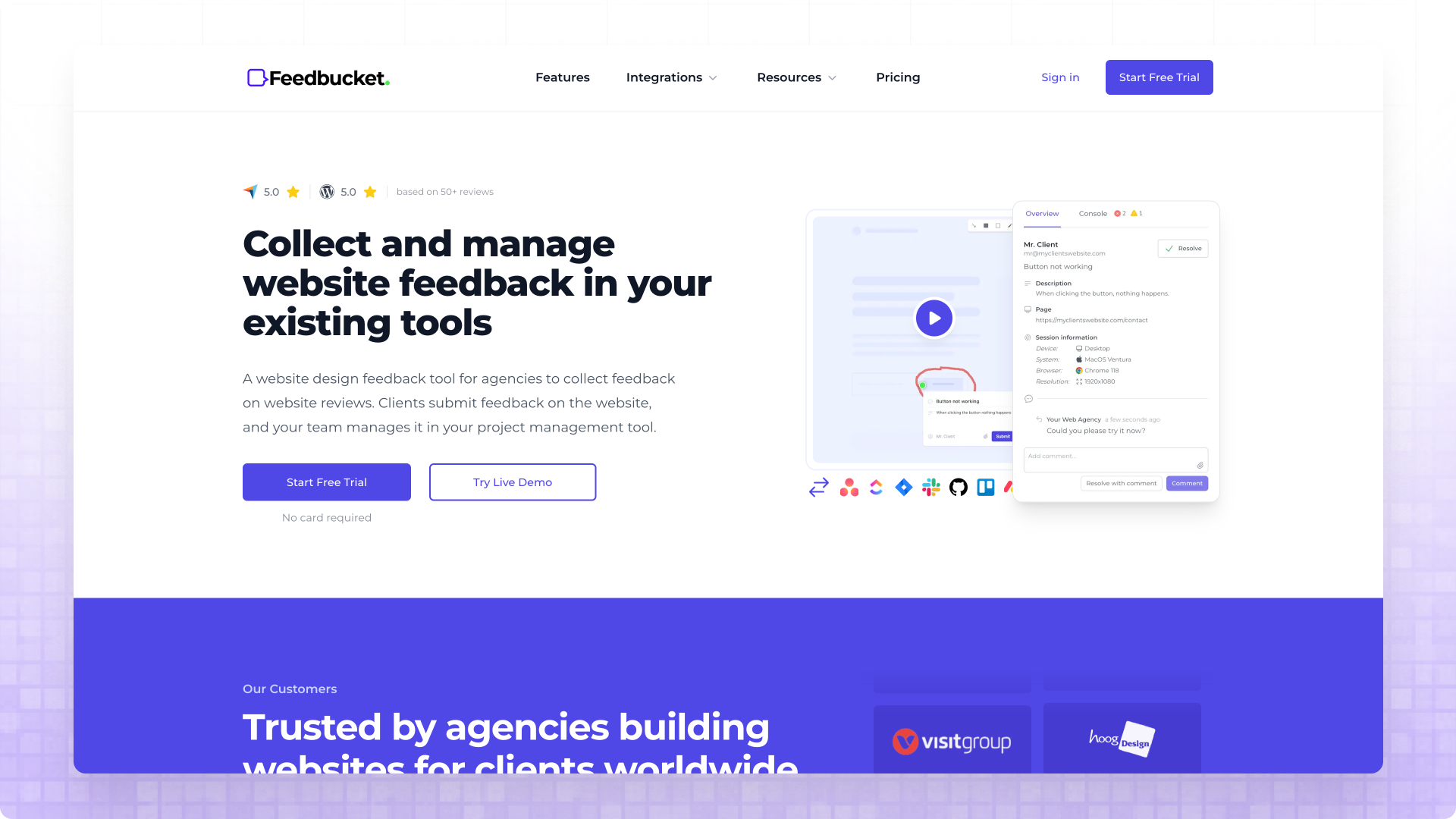
Feedbucket takes a different approach than Pastel's proxy model, using script installation to embed a feedback widget directly on your staging environment. The trade-off is worth examining: you lose the ability to capture feedback on sites you don't control, but you gain exceptionally thorough two-way synchronization with project management tools that Pastel lacks entirely. When you resolve an issue in Jira, Asana, ClickUp, or Trello, that status change reflects back in Feedbucket automatically, and new client feedback flows into your PM tool as actionable tasks with technical metadata attached.
The embedded guest portal allows clients to see existing feedback from other stakeholders while adding their own, preventing the duplicate feedback problem that isolated review sessions create. Starting at $39/month for unlimited projects with no commenting time limits, Feedbucket costs more than Pastel's base tier but less than the Studio plan you'd need to remove Pastel's 72-hour constraint. For agencies whose primary frustration with Pastel is the disconnect between feedback and task management, Feedbucket's integration depth offers genuine workflow unification.
3. MarkUp.io: Proxy Alternative With Multi-Format Support
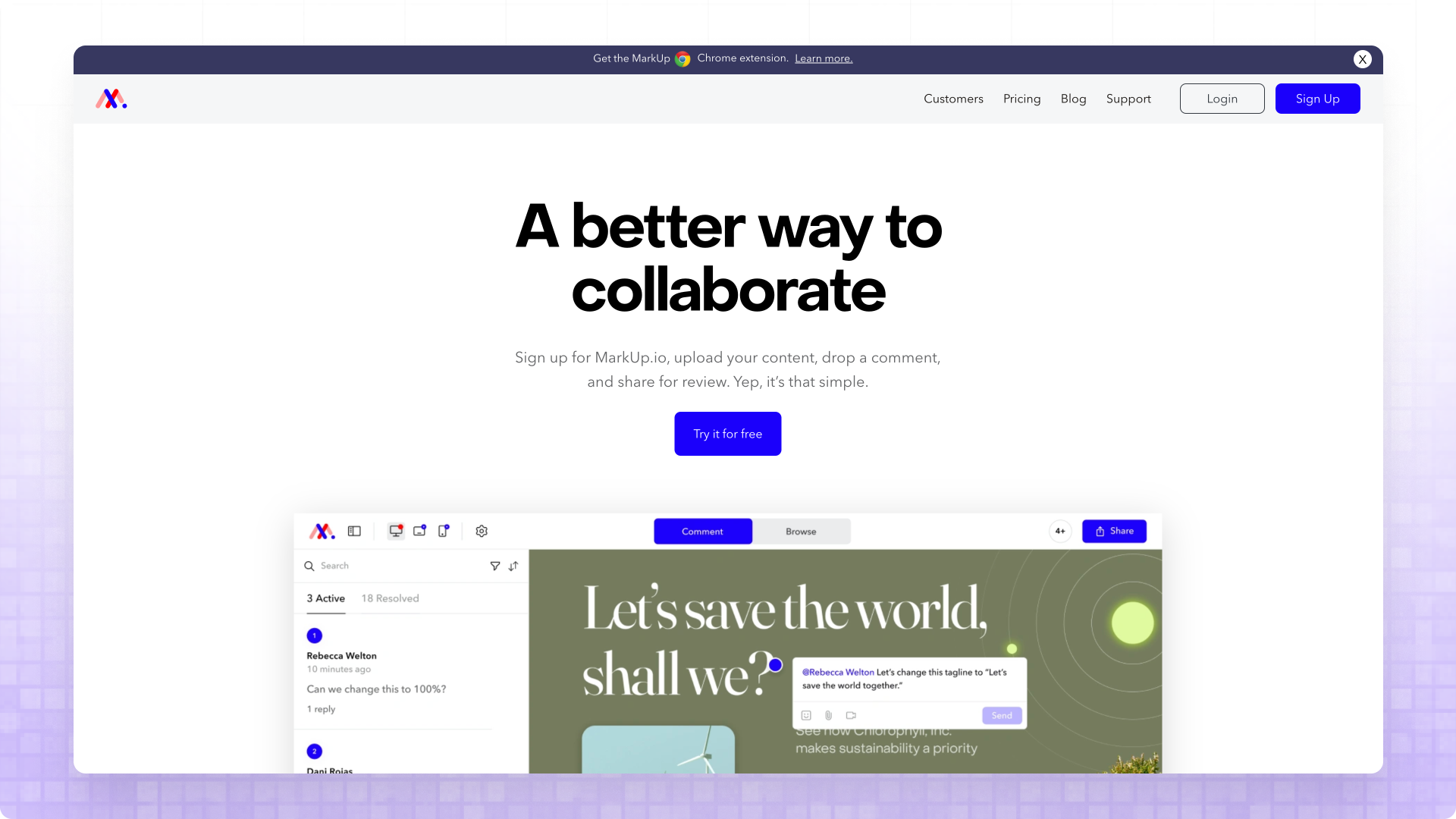
MarkUp.io offers a proxy-based approach similar to Pastel and Commentblocks, allowing feedback on websites without any installation—paste a URL, generate a shareable canvas, and clients annotate directly without accounts. Following their recent price increase from $29 to $79/month, MarkUp.io has positioned itself at a premium price point, but the platform extends beyond websites to support feedback on images and PDFs, which Pastel also offers through its multi-format canvas options. No commenting time limits apply on any plan, eliminating the constraint that pushes agencies toward expensive Pastel upgrades.
The integration ecosystem remains limited to Zapier and Slack, similar to Pastel's sparse connection options. Mobile responsiveness relies on desktop emulation rather than native device support, which means feedback captured on simulated mobile views may not reflect actual device behavior—a limitation shared with Pastel's proxy approach. For agencies primarily focused on multi-format feedback who don't need deep PM integration, MarkUp.io delivers solid capability, but at $79/month you're paying significantly more than alternatives like Commentblocks that offer similar proxy functionality.
4. BugHerd: Built-in Project Management
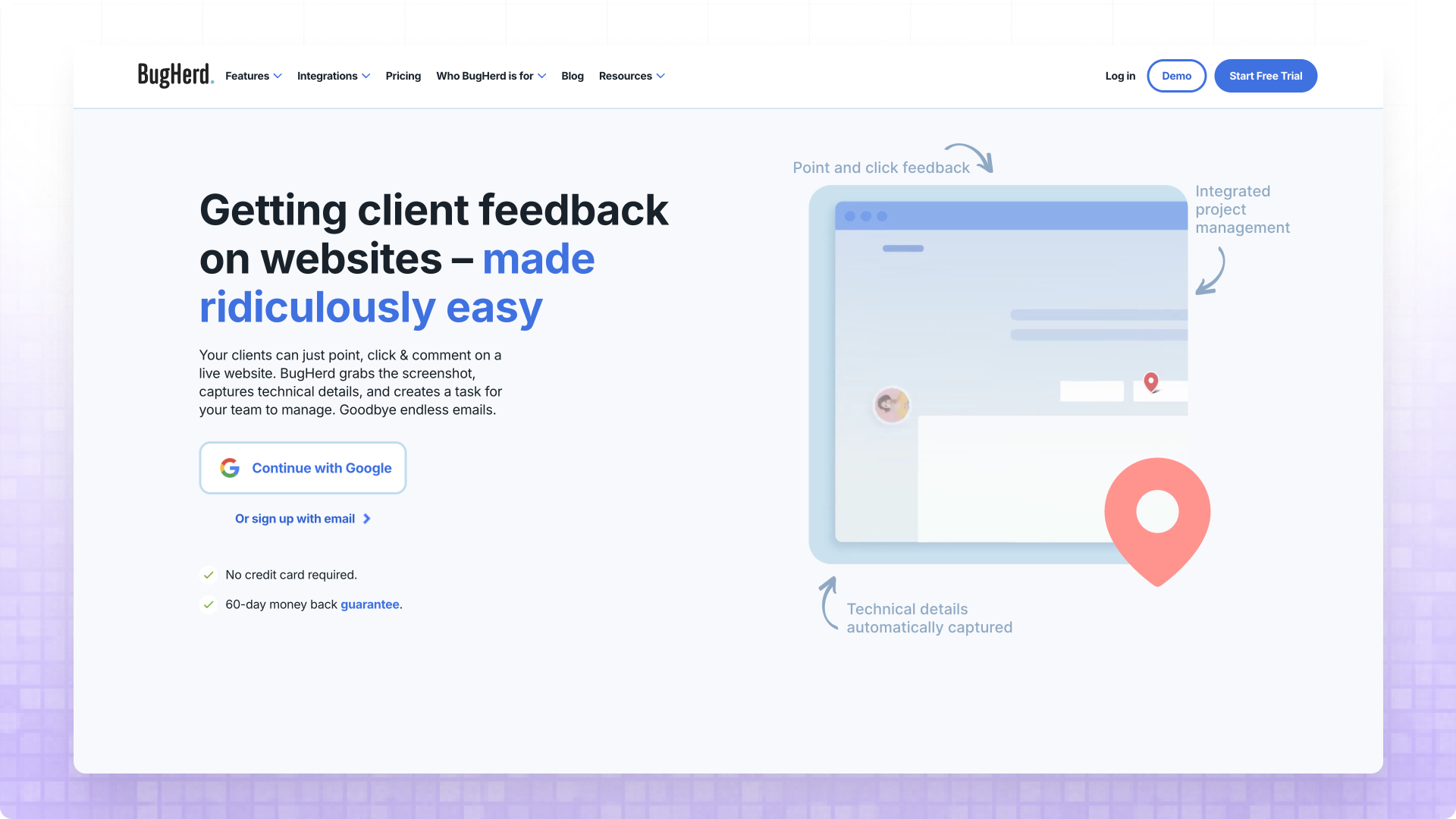
BugHerd takes a fundamentally different approach by including a built-in Kanban board that turns feedback into a self-contained project management experience. Rather than integrating with external PM tools, BugHerd becomes your task tracker—feedback items become tasks with status tracking, team assignment, and due dates. This makes sense for teams who don't already have PM tool commitments, but creates redundant overhead for agencies using Asana, ClickUp, or Jira.
The friction point that parallels Pastel's upgrade pressure is BugHerd's feature gating. The Standard plan at $39/month requires clients to install browser extensions to submit feedback, completely preventing mobile feedback since extensions don't work on phones. JavaScript installation that removes the extension requirement lives behind the $129/month Premium tier, making full functionality more expensive than Pastel's Studio plan. For teams who want feedback and project management unified in a single platform without existing PM commitments, BugHerd delivers genuine value—but it's not a direct proxy-based alternative to Pastel's approach.
5. Ruttl: Budget-Friendly With Live Editing
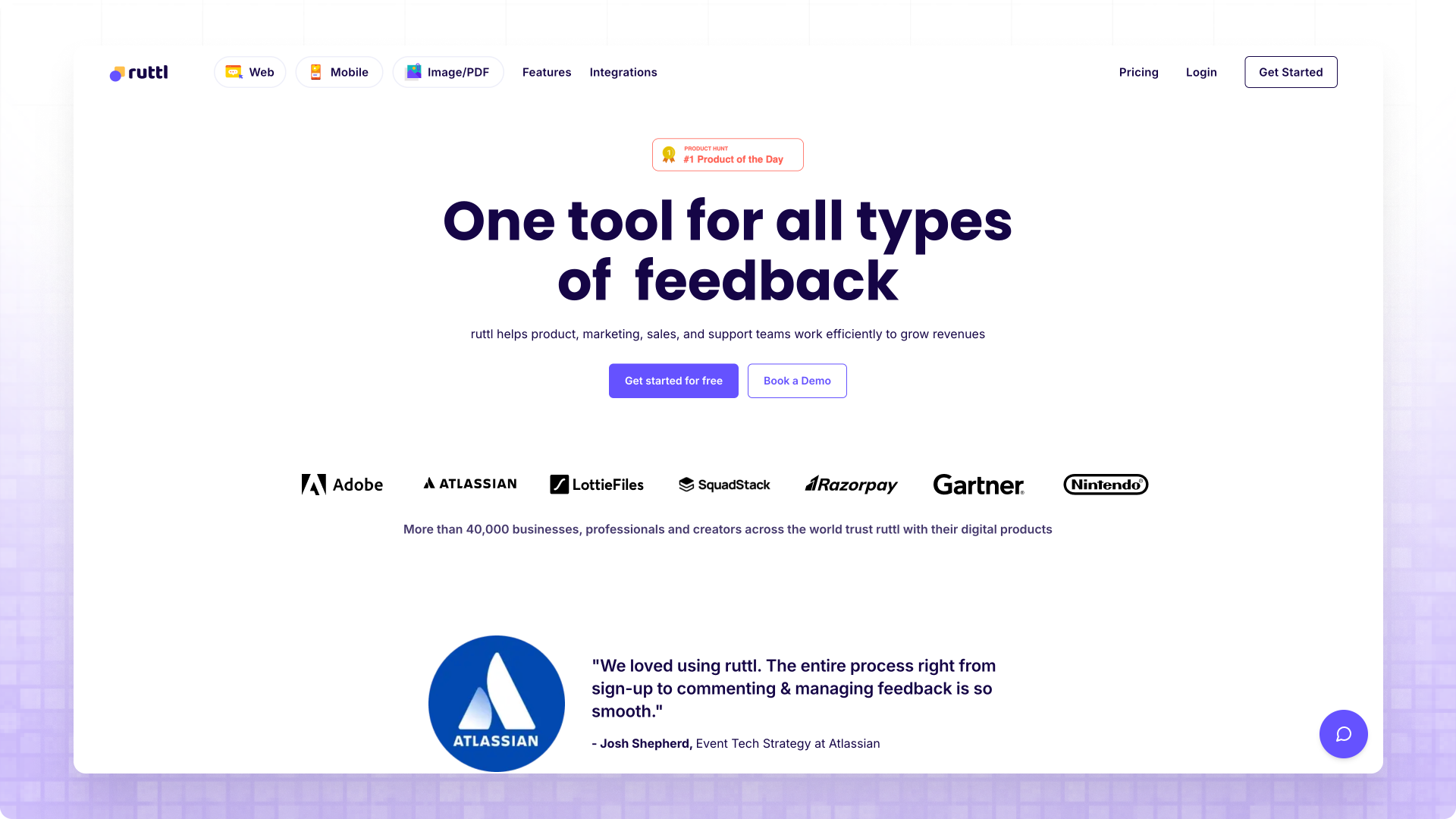
Ruttl offers the most aggressive pricing in the visual feedback space at $4/user/month, making it immediately attractive for cost-conscious teams. What differentiates Ruttl beyond price is live CSS editing—you can directly modify website designs including text, images, and CSS properties as part of the feedback process, going beyond annotation into actual design iteration. This edit-in-place capability lets you show clients what proposed changes would look like rather than describing them abstractly.
The concerns with Ruttl involve reliability and the per-user model. Discussions in agency communities like TheAdminBar have highlighted bugs and inconsistent behavior that frustrated users. The per-user pricing can also spiral when your entire team needs access—at $4/user, a ten-person team pays $40/month, approaching Feedbucket's flat-rate pricing without the integration depth. Sites behind Basic Authentication require a Chrome extension workaround, and integrations only create links to Ruttl tasks rather than syncing actual data. For solopreneurs or very small teams on tight budgets, Ruttl delivers genuine value, but agencies with reliability requirements may prefer established alternatives.
6. Marker.io: Developer-Centric Feedback
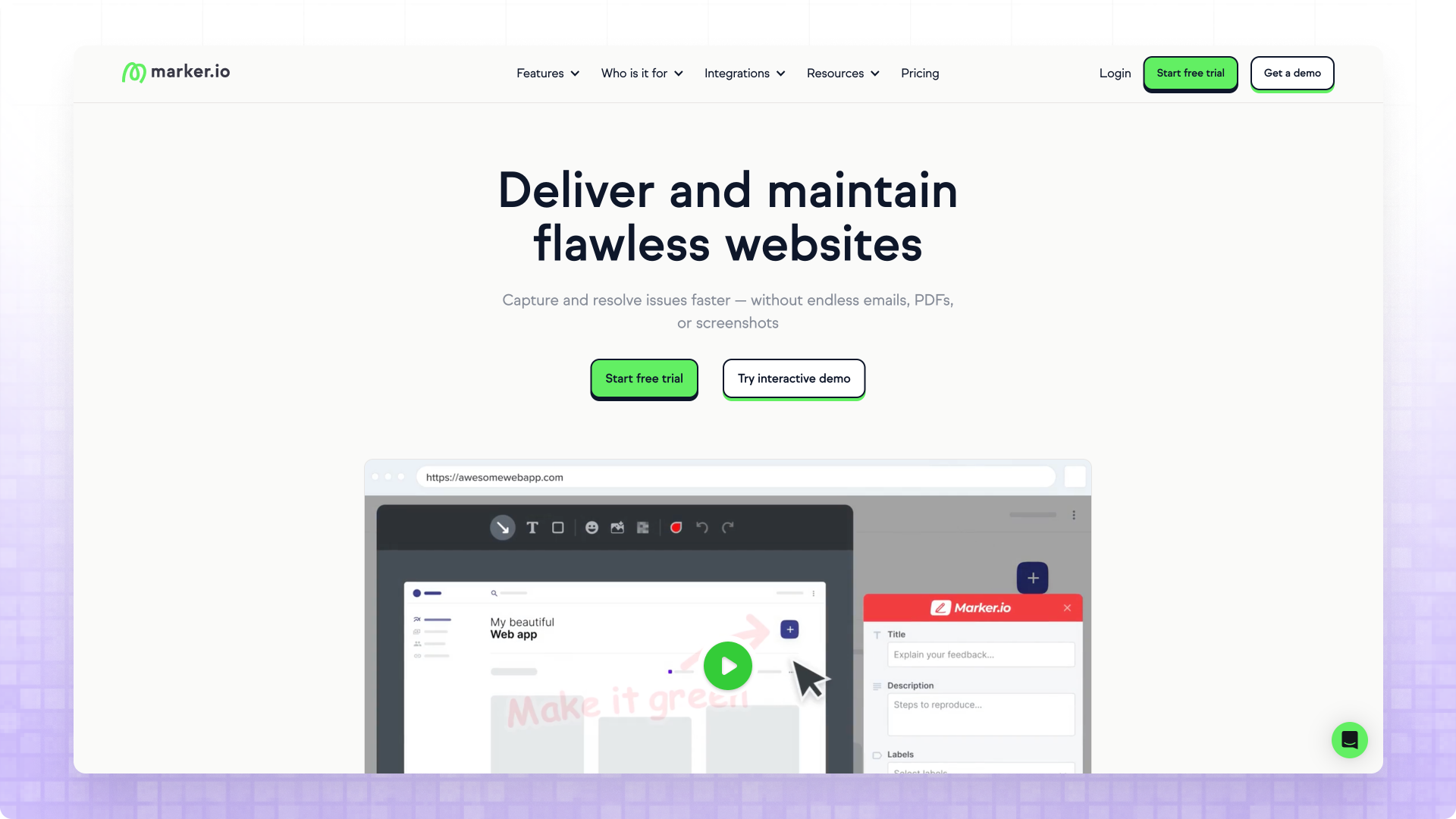
Marker.io positions itself for developer teams rather than agency client feedback, and its feature set reflects that orientation. Session replay records user interactions leading up to feedback submission, console log capture automatically attaches JavaScript errors, and robust two-way integrations with tools like Jira, GitHub, and Linear create genuine developer workflow benefits. This technical depth represents a fundamentally different philosophy than Pastel's client-focused simplicity.
The trade-off for agencies is client friction. The guest portal requires account creation, introducing signup barriers that Pastel's no-account approach avoids. Per-seat pricing at $59/month entry becomes expensive as teams grow. For internal QA and developer-to-developer feedback where technical depth matters and all participants are comfortable with accounts, Marker.io excels. For agencies whose primary feedback comes from non-technical clients who expect Pastel-like simplicity, the account requirement reduces adoption rates.
FeaturePastelMarker.ioCommentblocksEntry Price$29/mo$59/mo$14.99/moTechnical DepthBasicSession replay, console logsMetadata + consoleClient AccessNo signupAccount requiredNo signup, free guestsSetupProxyScript or extensionProxy
7. Punchlist: Webflow Community Favorite
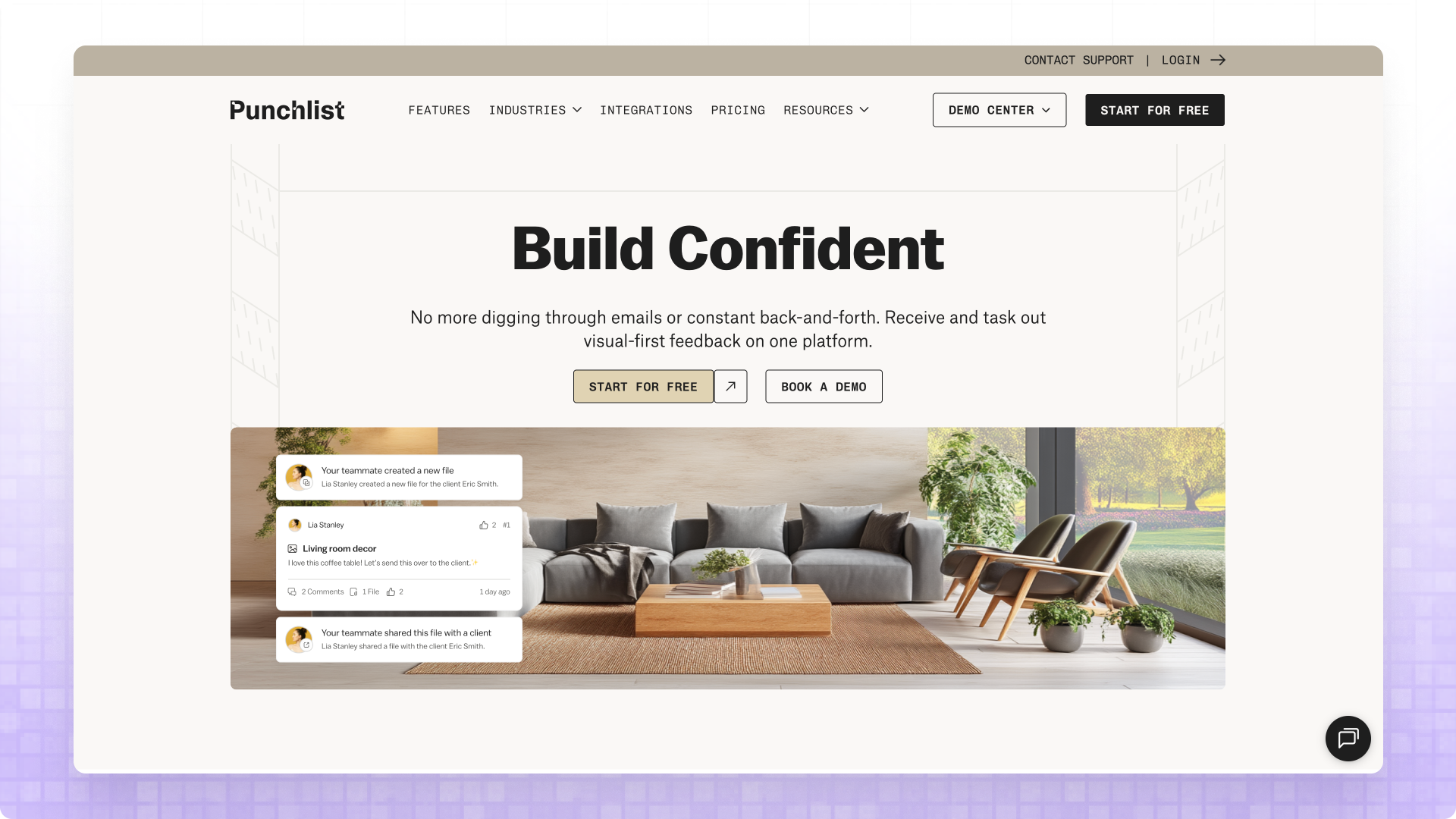
Punchlist has built a strong following in the Webflow community, offering an extension-based approach to visual feedback that integrates tightly with Webflow's design workflow. The tool captures feedback as discrete punch list items—a metaphor borrowed from construction that resonates with clients accustomed to final walkthrough checklists. For agencies specializing in Webflow development, the community familiarity and workflow alignment can simplify team onboarding.
The limitations become apparent outside the Webflow context. The extension requirement means clients must install browser software before providing feedback, which creates friction for non-technical stakeholders and completely prevents mobile feedback. At $69/month, Punchlist costs more than Pastel's Team plan and approaches the Studio tier that removes Pastel's time limits. Integration options remain limited without the two-way PM tool synchronization that modern workflows expect. For Webflow-focused agencies who can work within these constraints, Punchlist's community support adds value—but general agencies may find broader alternatives more flexible.
8. Superflow: Real-Time Collaboration Premium
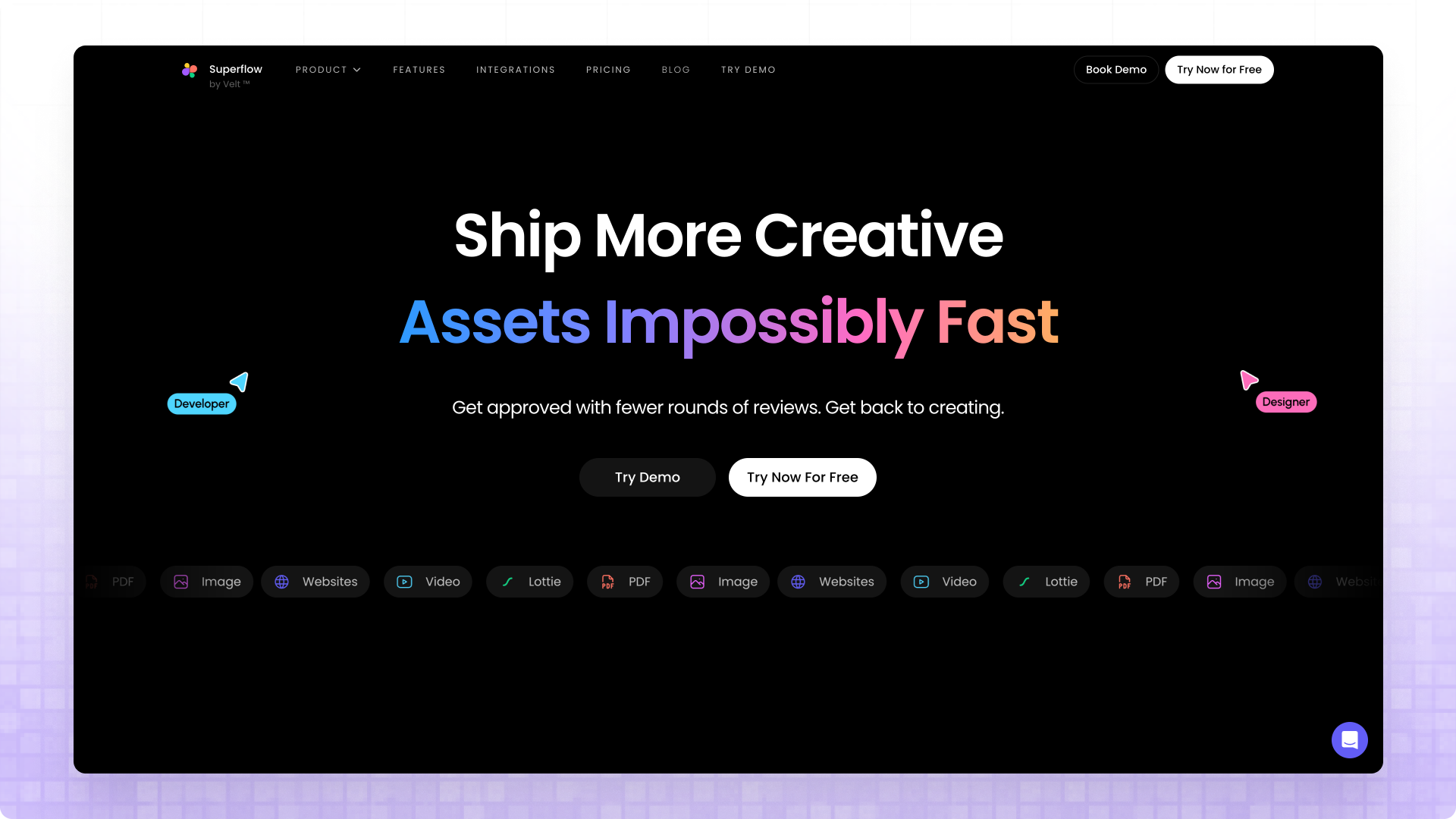
Superflow represents the premium end of the feedback tool spectrum, offering real-time collaboration features that go beyond asynchronous annotation into synchronous design review territory. Live huddles with real-time cursors, AI-powered copy suggestions, and voice recording create a collaborative experience closer to Figma than traditional feedback tools. For internal product teams conducting synchronized design reviews, these features add genuine value.
The pricing and integration gaps push agencies toward alternatives. The Starter tier at $119/month limits you to three projects, and unlimited projects require $249/month—dramatically more expensive than Pastel's Studio plan or any alternative on this list. Integration options connect only to Slack and Asana without bidirectional sync, meaning ClickUp, Jira, Linear, and Monday.com users maintain a separate feedback dashboard. For non-technical clients who just want to point at things and leave comments, Superflow's sophisticated features create friction rather than value.
Choosing the Right Alternative
The choice between Pastel alternatives depends on why Pastel's constraints became frustrating. If the 72-hour commenting window forced unnatural workflow compression, you need a tool without time limits—which every alternative on this list provides. If the integration gaps created manual work transferring feedback to your PM tool, you need a tool with two-way synchronization like Feedbucket or Marker.io. If Pastel's desktop emulation for mobile views wasn't capturing real device behavior, you need native mobile support like Commentblocks provides.
For agencies and freelancers who loved Pastel's zero-installation promise but outgrew its constraints, I recommend Commentblocks as the natural evolution. Starting at $14.99/month with no time limits, free unlimited guest seats, no client signup required, and native mobile support, Commentblocks delivers the same proxy-based simplicity that made Pastel appealing without the upgrade pressure or feature gaps that drove the search for alternatives. If deep two-way PM integration matters most, Feedbucket delivers that at $39/month with the trade-off of requiring script installation.
If you're ready to see what Pastel's zero-friction philosophy looks like without time limits, Commentblocks offers a 14-day free trial with no credit card required. Paste any URL and send your first feedback link to a client in under 60 seconds.

Blog: Tips & Insights
Tips, strategies, and updates on client management, web development, and product news from the Commentblocks team.



Frequently Asked Questions
.svg)

Ready to collect feedback the right way?